Structured Cabling
Structured Cabling for Integrated ELV Projects

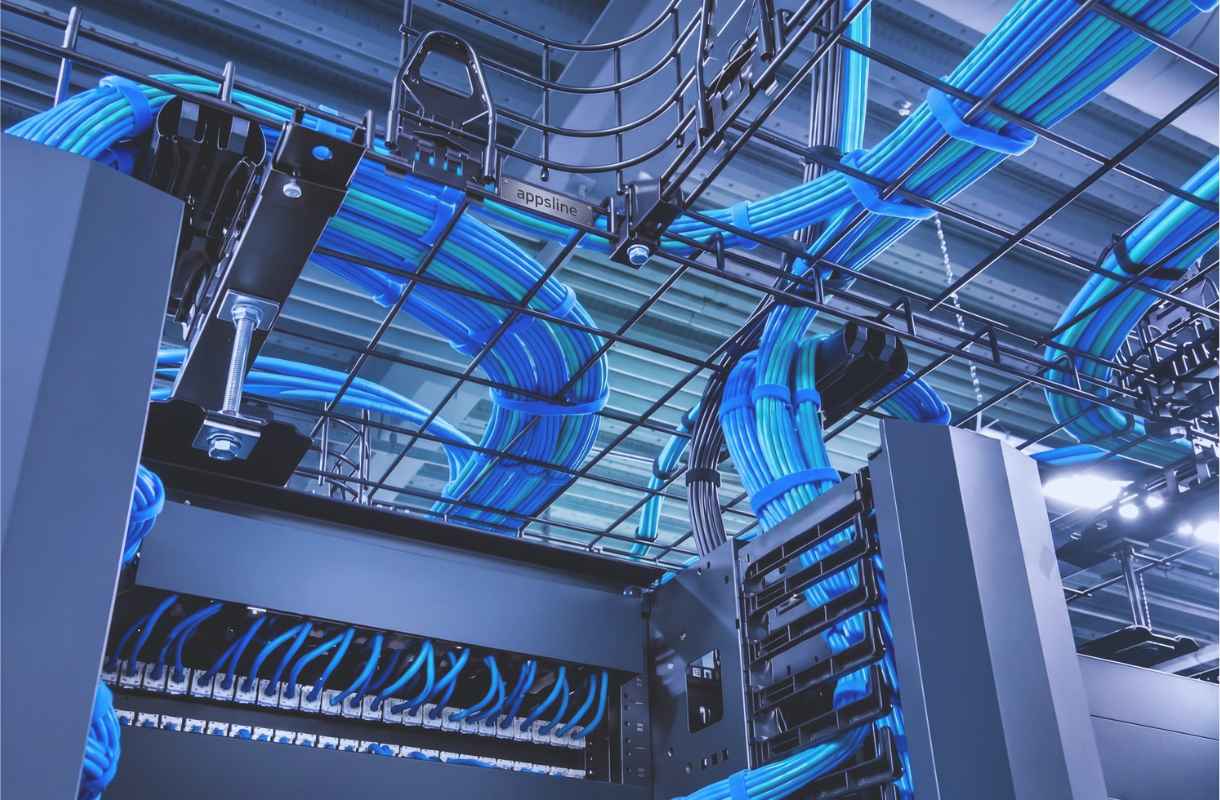
Structured cabling is the common physical foundation behind many modern IT and ELV systems. When networking, Wi-Fi, CCTV, access control, IP-PBX, public address, audio visual and related systems are planned through one coordinated cabling strategy, the project becomes easier to design, install, test and document. A single accountable cabling approach also helps teams maintain consistent routes, labelling, rack organization and termination standards instead of creating separate physical pathways for every technology.
One of the practical advantages is better use of building space and installation materials. Coordinated routing can significantly reduce the need for duplicated PVC conduits, bends, supports and other pathway materials that may otherwise be installed independently by different vendors. This can reduce a substantial amount of PVC conduit consumption and related wastage while keeping service routes more orderly. It also makes future changes easier because spare capacity, cable pathways and termination points can be planned before the project reaches the handover stage.
For an integrated ELV project, the benefit continues beyond installation. A common cabling methodology supports systematic testing, documentation, fault identification and future maintenance, giving the customer a clearer technology environment to manage. When one technology partner takes responsibility for the physical layer across multiple systems, coordination gaps between vendors can be reduced and the overall deployment can be more predictable. The result is a cleaner infrastructure foundation that can support new devices and services without repeatedly disturbing the building fabric.
CCTV & AI Analytics
CCTV Is More Than Surveillance: From Video to Intelligent Site Analytics

A modern CCTV system should not be viewed only as a collection of cameras used to record incidents. When properly designed, video infrastructure can become an operational intelligence platform that helps organizations understand what is happening across a facility. High-quality cameras, suitable storage, video management software and well-planned coverage remain essential, but the real value grows when the system is designed around the business questions the customer wants to answer rather than only the need to watch a screen.
AI-enabled analytics can extend the role of CCTV beyond traditional surveillance. Depending on the camera, software and deployment environment, organizations can use people or vehicle counting, occupancy analysis, movement or event detection and other analytics to identify patterns and support faster decisions. These capabilities can help with queue management, capacity planning, restricted-area monitoring and operational reporting. The technology should be selected carefully, with attention to accuracy, lighting, privacy, retention requirements and the practical conditions in which the analytics will operate.
CCTV can also form part of a broader facility monitoring strategy when it is integrated with other systems and sensors. In suitable environments, climate or environmental monitoring can complement visual information by providing temperature, humidity or other operational readings through dedicated sensors and connected platforms. This creates a more complete picture of facility conditions instead of relying on video alone. The goal is to move from passive recording toward useful, actionable intelligence that improves security, operational awareness and the ability to respond to changing conditions.
Access Control
BSL-3 Laboratory Access Control: Interlocking, Occupancy Logic and Reporting

Access control for a BSL-3 laboratory requires more than a standard door reader and lock. Movement between controlled areas must be designed around the laboratory workflow, authorization requirements and the need to prevent unsuitable door states. The access-control platform therefore has to work as part of the facility engineering design, with clearly defined permissions, controlled entry points, event handling and integration with the physical door hardware. Good planning also considers what happens during alarms, power events, emergency conditions and authorized operational overrides.
Interlocking is a key part of the design where two or more doors must not be opened at the same time. Door interlock logic can be combined with occupancy or sequencing rules so that access to a controlled zone follows the intended operational sequence. Reports and event histories are equally important because they provide a traceable record of access activity, failed attempts and system events. This combination of access authorization, interlocking, occupancy logic and reporting gives laboratory management a stronger mechanism for controlling and reviewing movement through critical areas.
Appsline implemented a BSL-3 laboratory access-control system at the National Institute of Virology, Alappuzha, with a focus on controlled access, interlocking, occupancy logic and reporting. Such projects require close coordination between access-control equipment, electrical interfaces, door hardware and the facility operating process. The objective is not simply to secure a door, but to create a controlled movement system that supports the laboratory environment and provides administrators with the visibility required to manage and review access events.
Cyber Security
Cybersecurity: Building a Stronger Security Perimeter

A strong cybersecurity perimeter starts with understanding that business connectivity has expanded far beyond a traditional office network. Internet gateways, remote users, cloud services, wireless networks, endpoints and connected devices all contribute to the organization’s attack surface. A gateway firewall remains an important control because it provides a managed boundary for traffic, policies and network access, but perimeter security becomes much stronger when it is designed as part of a broader security architecture rather than treated as a single appliance.
Endpoint protection adds another important layer because threats can reach devices through email, downloads, removable media, compromised credentials or other paths that may bypass the network edge. Network segmentation, access policies, secure wireless design, regular configuration review and appropriate monitoring can further reduce unnecessary exposure. The right combination depends on the organization, but the principle is consistent: controls should work together so that one missed event does not automatically become a major business incident.
Cybersecurity also has a lifecycle. Policies, firmware, signatures, endpoint agents, user permissions, configuration backups and incident-response procedures require ongoing attention. A security perimeter that was well designed at deployment can become weaker as applications, users and connectivity change. Regular review and technical support therefore matter as much as the initial installation. A practical cybersecurity program combines technology with disciplined operations so that the organization can maintain visibility, respond to issues and strengthen its protection as the business evolves.
Support & AMC
Support: From Deployment to Lifecycle Support

A successful technology project does not end when the installation is complete. The first priority after deployment is to make the environment supportable: configurations should be documented, device details recorded, credentials and access procedures controlled, network and system diagrams maintained, and critical backups stored securely. A proper handover gives the customer and support team a clear picture of what was installed and how it should operate. This reduces dependency on individual technicians and makes future troubleshooting significantly more efficient.
Lifecycle support then turns that project foundation into a dependable operating process. Preventive maintenance, health checks, firmware planning, configuration backups, incident response and service-call management can identify issues before they become major disruptions. For customers using multiple IT and ELV systems, coordination is especially important because a fault may involve physical cabling, power, networking, security devices or application settings. A support partner who understands the complete environment can investigate across these layers instead of treating every symptom as a separate problem.
AMC and technical support should therefore be considered part of the technology lifecycle, not an optional service added later. A structured support model gives organizations clearer escalation paths, service records and maintenance responsibility while helping protect the investment made in infrastructure. From deployment through upgrades and eventual replacement, the objective is continuity: systems should remain documented, serviceable and aligned with changing business requirements. Good lifecycle support turns an installed technology environment into a managed business asset.
Business Technology
Business Technology: Why Technology Projects Need One Accountable Owner

Modern business technology projects rarely involve a single system. A typical deployment may include structured cabling, switches, Wi-Fi, servers, cybersecurity, CCTV, access control, IP-PBX, audio visual and other ELV systems. When each scope is delivered independently, responsibility can become fragmented. One vendor may blame the network, another the application, another the cabling, while the customer is left to coordinate the entire problem. A single accountable owner creates a clearer point of responsibility from requirement gathering through implementation and handover.
Centralized project ownership also improves coordination between technical layers. Cable routes can be planned with network and security requirements in mind, power and rack requirements can be aligned, device addressing and configuration dependencies can be considered before installation, and testing can be organized as one project rather than a series of unrelated activities. This does not mean every component must come from one manufacturer; it means the customer has one technology partner responsible for coordinating the interfaces between different systems and vendors.
The long-term value becomes even clearer after handover. A single accountable technology owner can maintain documentation, coordinate support, manage escalations and help the customer plan upgrades across the environment. This reduces the effort required to diagnose cross-system problems and gives management a clearer view of technology priorities. For businesses that want dependable outcomes rather than disconnected installations, accountable ownership is an important part of project governance as well as technical delivery.